

Lateral Attorney Hiring Success Rates Should Be Better Than a Coin Flip
/Why Lateral Attorney Hire Rate is High — And the Warning Signs Firms Miss
In today’s legal market, lateral hiring has become one of the primary strategies law firms use to accelerate growth, expand practice capabilities, and strengthen client relationships. Yet despite the investment, urgency, and optimism surrounding these hires, many lateral attorney placements fail to deliver the long-term value firms expect.
Some underperform quietly, some leave within a few years, and others create internal disruption that extends far beyond lost revenue. What makes this particularly concerning is that many of these outcomes are not random — they are predictable.
Industry studies and law firm leadership surveys have estimated that approximately 40% to 60% of lateral partner hires either fail to meet expectations or leave within several years. Research cited by Citi Private Bank Law Firm Group and ALM found that only about 59% of lateral partner moves were ultimately considered successful.
At the same time, the legal industry continues to pursue lateral hiring aggressively. Some industry research suggests that 96% of firms view lateral hiring as one of their most important growth strategies. That contradiction reveals a hard truth: Law firms are investing heavily in a hiring model that often fails to produce the long-term outcomes they expect.
The issue is not that law firms are hiring unintelligent or unqualified attorneys. Most lateral candidates possess impressive credentials, strong technical expertise, and proven legal experience. The issue is that many firms are still evaluating lateral talent using outdated assumptions and incomplete hiring models.
The Illusion of Portable Success
One of the most common mistakes in lateral hiring is assuming that past success automatically translates into future success in a different environment. A strong resume does not guarantee alignment.
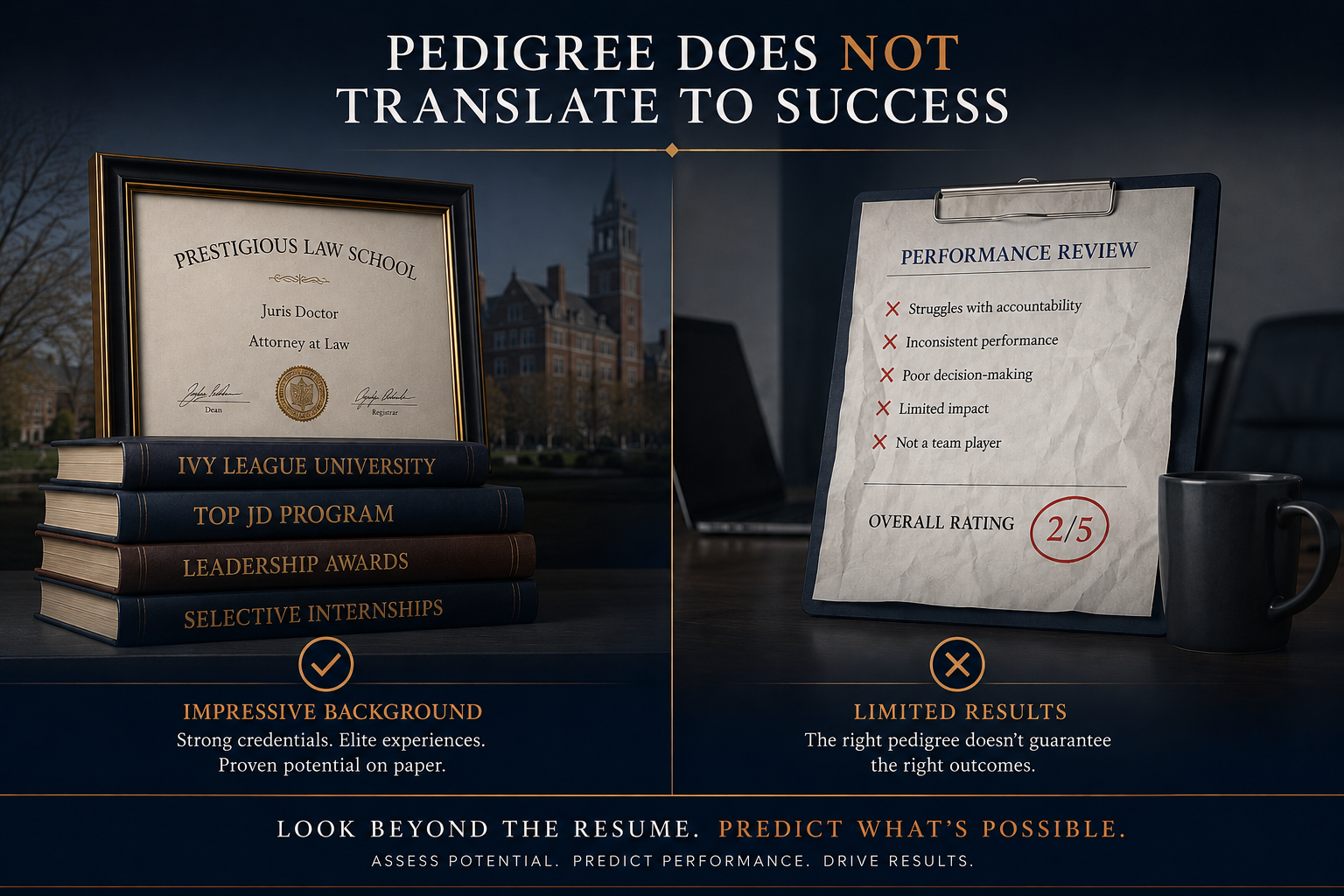
An attorney may have an elite pedigree, a strong practice background, an impressive client list, and years of tenure at a respected firm, yet still struggle after a move. Why? Because sustained legal success is rarely driven by technical competency alone.
The highest-performing attorneys often succeed within highly specific ecosystems with leadership structures, firm cultures, compensation philosophies, collaboration expectations, business development environments, and personality dynamics.
When firms evaluate only experience and portable business, they risk overlooking whether the attorney’s behavioral style and professional drivers actually align with the new environment. That disconnect is where many lateral failures begin.
The Hidden Cost of a Failed Lateral Hire
Most firms calculate the cost of a failed hire based on compensation, recruiting fees, and lost billable hours, but the true cost is usually much higher. A failed lateral hire can create disruption within practice groups, damage to client relationships, morale issues among existing attorneys and staff, reputational concerns, leadership distraction, and opportunity costs tied to lost momentum.
In some cases, firms spend months attempting to “make the fit work” before acknowledging the mismatch. By that point, the damage has often extended far beyond the original hiring investment, and the retention data reinforces the concern.
Recent industry reporting indicates that approximately one-third of lateral partners leave within five years of joining a new firm. Even among Am Law 100 firms, where firms have significantly more resources dedicated to recruiting and onboarding, retention challenges remain substantial.
For leadership teams, the real question is no longer “Can this attorney do the work?” The real question is “Will this attorney thrive here, contribute strategically, and integrate successfully over the long term?” Those are very different evaluations.
Why Traditional Interviews Often Fail
Most attorney interviews are still heavily focused on technical (legal) experience, practice specifics, client originations, and resume validation. While those areas matter, they rarely uncover the deeper predictors of long-term success.
Traditional interviews often fail to identify leadership style, communication dynamics, adaptability, motivational drivers, conflict tendencies, collaboration preferences, resilience under pressure, and cultural compatibility. The problem is compounded by the fact that experienced attorneys are typically highly polished interviewers, and they know how to present credentials. That means that firms frequently miss how the attorney actually operates inside the organization once the honeymoon phase ends. The result is a hiring process that evaluates competence while underestimating fit.
The Warning Signs Firms Commonly Miss
Many failed lateral hires leave clues during the hiring process. Unfortunately, firms often overlook them in pursuit of revenue potential or competitive pressure. Some of the most common warning signs include:
Overemphasis on Compensation. When compensation dominates early conversations, firms should explore whether the attorney is running toward opportunity — or away from dissatisfaction.
Vague Explanations Around Departures. Carefully worded explanations regarding prior transitions may signal unresolved leadership or cultural issues.
Weak Internal Relationship Examples. Attorneys who struggle to describe mentorship, collaboration, or team contributions may have difficulty integrating into a firm environment.
Inflated Portability Assumptions. Portable business is often more fragile than projected. Client loyalty may be tied to institutional relationships, billing structures, or broader firm platforms.
Misalignment Between Personality and Environment. A highly autonomous attorney may struggle in a collaborative culture. Likewise, consensus-driven personalities may struggle in highly aggressive environments.
Lack of Strategic Career Vision. Some attorneys pursue lateral moves reactively rather than strategically, creating long-term instability.
These indicators do not automatically disqualify a candidate, but they should trigger deeper evaluation and more thoughtful due diligence.
The Firms That Hire Best Evaluate More Than Credentials
Elite firms increasingly recognize that lateral hiring is not simply a recruiting exercise. It is a strategic leadership decision. The strongest firms now evaluate behavioral compatibility, communication style, leadership potential, adaptability, motivational alignment, and long-term integration likelihood alongside traditional qualifications.
Research across the legal industry increasingly points to one critical differentiator: integration.
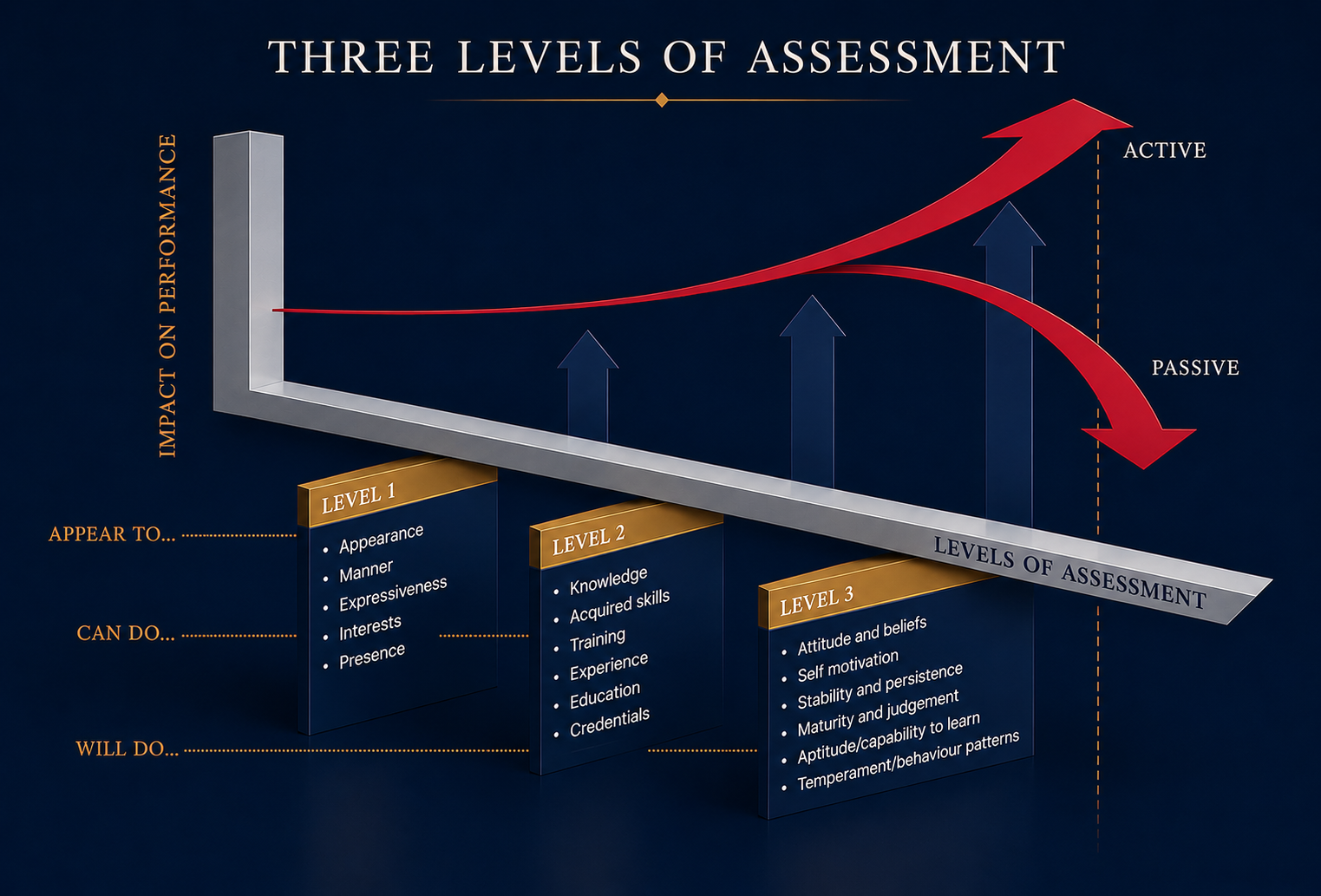
Studies from organizations including Decipher have identified structured integration and onboarding as among the strongest predictors of lateral success and retention. That means the firms that hire best are not simply recruiting well, they are integrating well.
Some firms are also incorporating behavioral and psychometric assessment tools to better understand decision-making tendencies, leadership approach, interpersonal dynamics, and cultural fit. This does not replace human judgment, they strengthen it. When used properly, using science-based psychometric tools can help firms move beyond intuition and surface risks that traditional interviews often miss.
Interestingly, industry retention studies have also suggested that firms making fewer, more selective lateral hires often achieve stronger long-term retention outcomes than firms pursuing aggressive volume-driven lateral expansion. That reinforces an increasingly important principle in legal hiring -Precision often outperforms speed.
Hiring Success Is Increasingly Predictive, Not Reactive
The legal industry is evolving rapidly. Competition for high-performing attorneys remains intense. At the same time, client expectations, firm economics, and attorney mobility continue to shift. Attorney attrition across the industry remains extraordinarily high. NALP Foundation research has reported that approximately 72% of associates leave firms within four years. Against that backdrop, firms cannot afford these avoidable hiring mistakes.
As a result, the firms that consistently hire well are becoming more sophisticated in how they evaluate talent. They are moving away from purely resume-driven hiring models and toward more predictive approaches focused on long-term success. Because the best lateral hires do more than fill seats. They strengthen culture, expand capability, elevate leadership, improve client relationships, and create measurable long-term impact. They achieve a level of success that rarely happens by accident.
Final Thoughts
Most failed lateral attorney hires are not the result of poor legal talent, they are the result of incomplete evaluation. Law firms that continue relying solely on resumes, technical interviews, and portable business assumptions will likely continue experiencing avoidable hiring failures.
The firms that separate themselves as firms with success hiring track records are the ones willing to evaluate talent more holistically — balancing experience and performance with behavioral fit, leadership alignment, and long-term strategic compatibility.
In an increasingly competitive legal market, smarter hiring is no longer just a recruiting advantage, It is a leadership advantage.
Looking to improve lateral hiring outcomes within your firm?
CGAVERY helps law firms reduce hiring risk through targeted executive search, strategic talent advisory, and behavioral-based evaluation approaches designed to improve long-term fit and performance.